Paper Faces
Born from paper, shaped over years, and carried across borders into safety.

Paper Faces is not a single artwork.
It is an ongoing artistic series that began in 2008 and continues to this day.
I created Paper Faces long before I came to the United States.
In many ways, it was Paper Faces that brought me here.
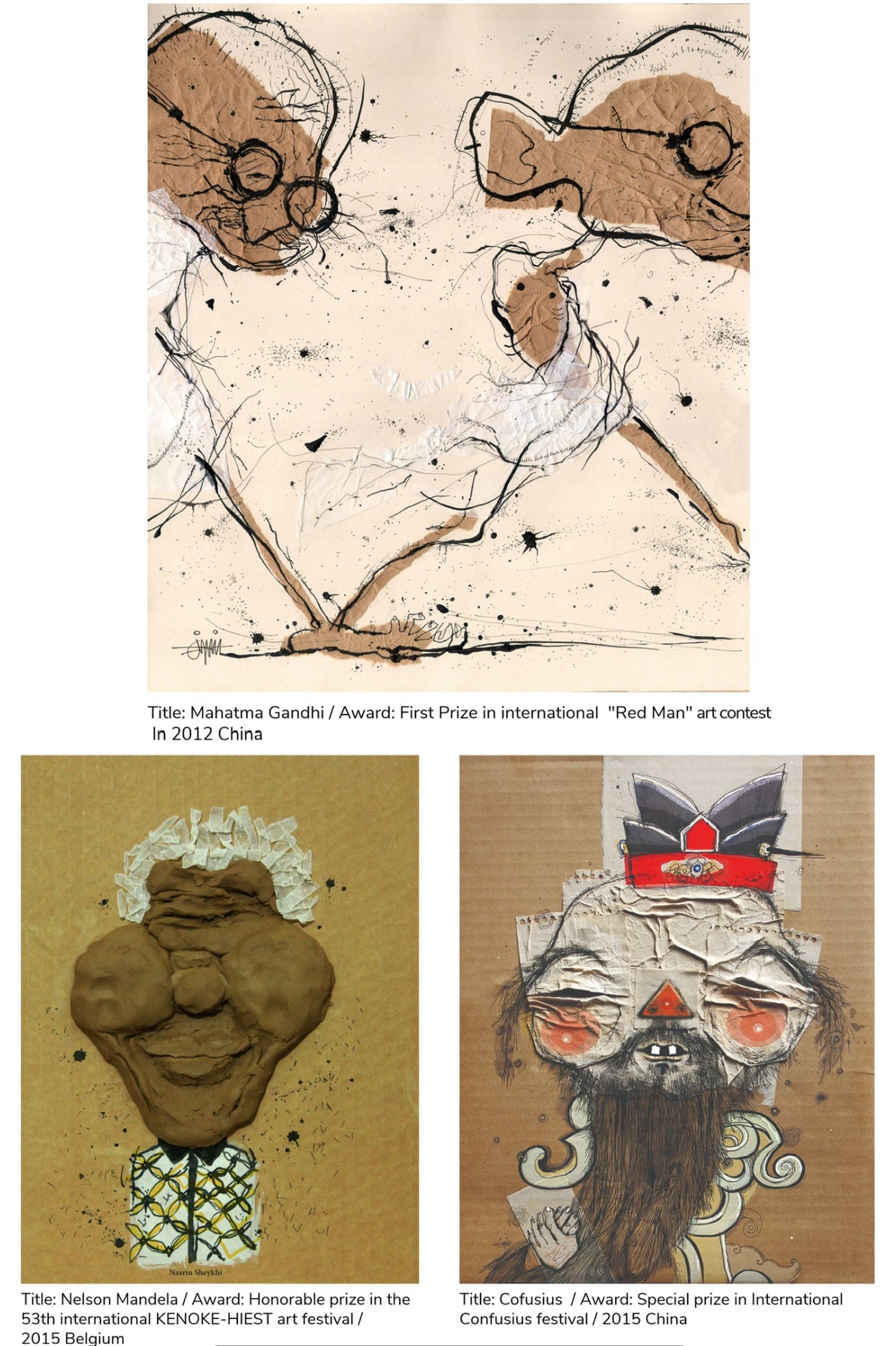
The series was born during a time when access to art materials in Iran was limited due to sanctions.
I began working with recycled paper—tearing, layering, collaging—not as a concept at first, but out of necessity.
Over time, those fragile papers became my language.
They became my signature.
Paper Faces grew out of experimentation, exaggeration, and a deeply human need to move beyond realism.
The lines were influenced by children’s drawings and ancient, primitive forms—because I wanted my work to exist without borders, in a place where daily life was full of boundaries.
Through this series, I built a world of my own.
Sometimes I drew with my left hand.
Sometimes I allowed chance to enter the work—almost like a quiet form of happening art.
I believed, and still believe, that life itself is largely a happening:
we are born without control, and one day we leave the same way.
That philosophy became one of the foundations of Paper Faces.
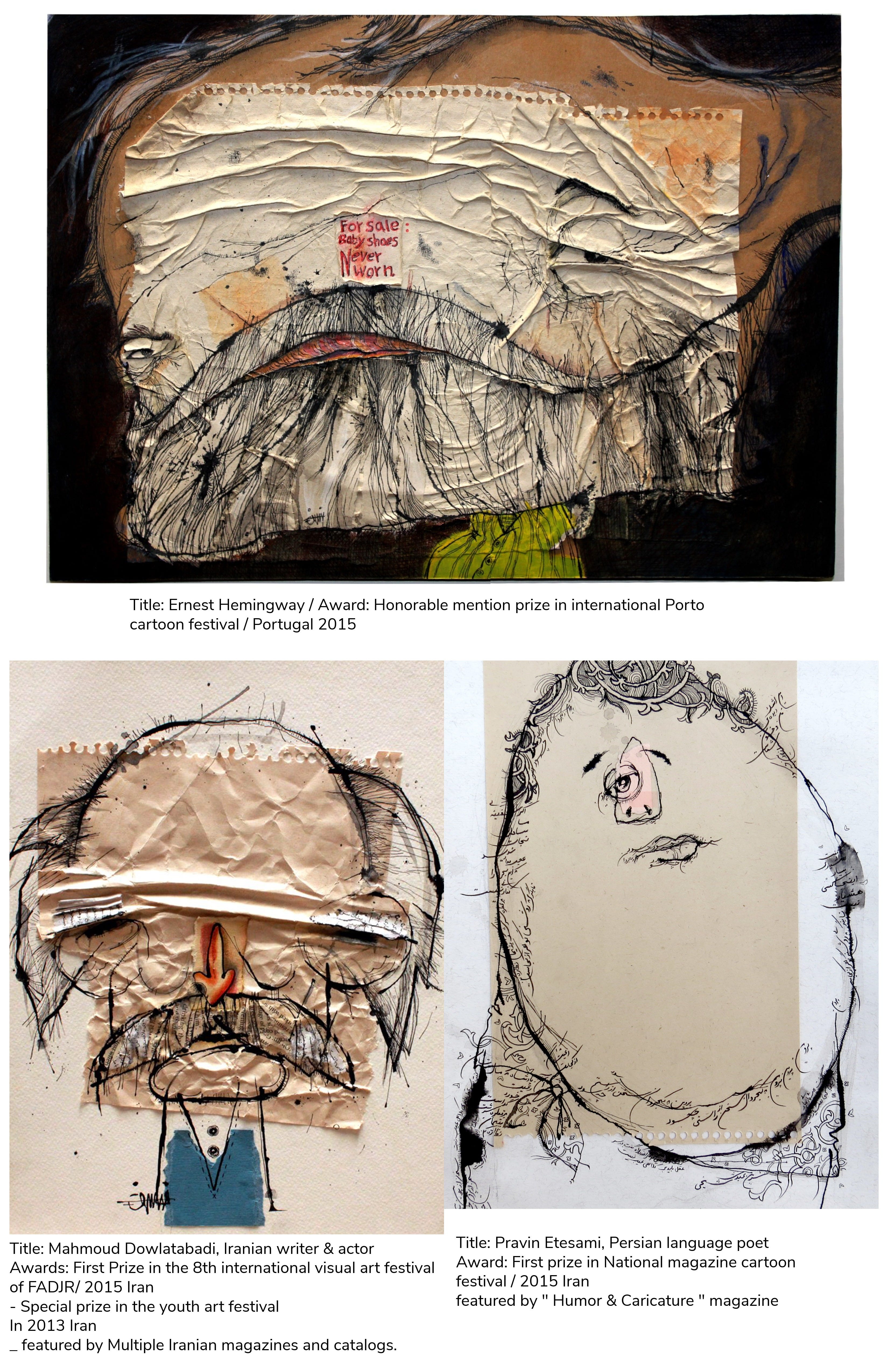
While living in Iran, Paper Faces evolved into a recognized body of work.
I published two books based on the series: *Paper Faces* and *Grotesque*.
I held multiple exhibitions, and my final solo exhibition in Iran,
titled *Grotesque*, took place in 2016.
By then, the entire body of work had been collected and sold.
In 2017, I immigrated permanently to the United States—not as a visitor, not as a refugee, and not undocumented—but as an artist recognized for extraordinary ability.
Through Paper Faces, I was awarded the U.S. Extraordinary Ability Grant (Einstein Grant / EB-1), received my Green Card, and entered the country within the framework of permanent citizenship. Three years ago, I officially became a U.S. citizen.
Paper Faces played a central role in this journey.
This series is why my work was evaluated, recognized, and accepted internationally.
It carried me across borders.
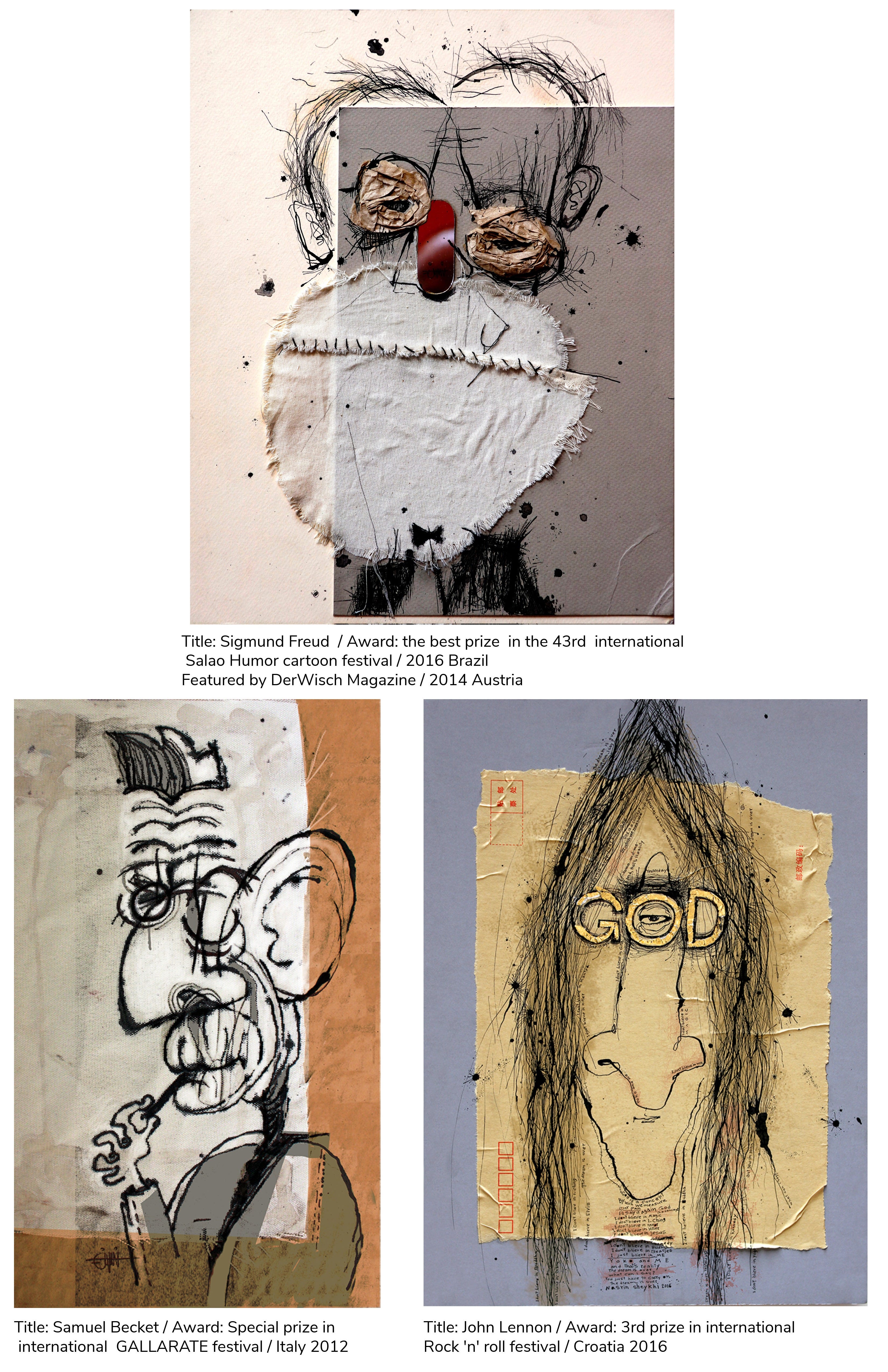
Less than eight months after immigrating, my work was featured in major American and international medias, including an interview with *The New York Times* in 2018,
focused on a portrait created with the Paper Faces technique.
During that same period, I held a solo exhibition in the NYC, United States
that sold out completely—an experience that remains one of the most meaningful milestones of my career.
In 2020, with the onset of COVID and the life changes that followed,
including frequent relocations,
my production pace naturally slowed.
Like everyone else, my life shifted.
But Paper Faces never disappeared.
It continued to live quietly alongside me.
What continues to move me is how deeply people connect with these works.
Despite their bold exaggeration and unconventional process,
Paper Faces resonates—with audiences, collectors, and gallery professionals alike.
That connection tells me this language works.
It communicates.
It endures.
Paper Faces did not only shape my career.
It shaped my life.
It carried my work into international exhibitions, global media, private and institutional collections—and into a country that allowed me to exist fully as an artist:
uncensored, unrestricted, and present.
No place is perfect, but the United States gave me space—space to create freely and to continue this series without limitation.
Paper Faces is still with me.
And it’s not finished yet.